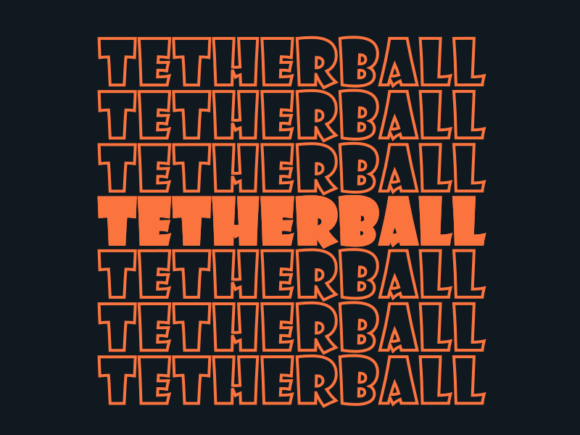
Tetherball SVG Cut File: Graphics for Print Templates
As a brand designer who’s helped over 80 local businesses refine their visual identity—from artisanal candle makers in Portland to family-run bakeries in Austin—I opened the Tetherball SVG Cut File expecting playful energy. What I found was more nuanced: a clean, rhythmic vector illustration with balanced negative space, subtle line weight variation, and a slight hand-drawn charm that avoids looking overly digital or generic. It reads as friendly but intentional—not childish, not corporate, but warmly human. For a small business branding project, that’s gold.
This graphic design asset lands squarely in the “approachable modern” zone—ideal for brands leaning into lighthearted authenticity: think a summer-themed kombucha line, a backyard-grown flower shop launching seasonal bouquets, or a handmade soap brand built around outdoor wellness rituals. It suggests movement, playfulness, and grounded joy—not loud festivity, but quiet confidence in simplicity. It feels handmade without sacrificing polish, organic without appearing rustic or dated.
Where This Tetherball SVG Cut File Adds Real Brand Value
In packaging design, this isn’t just decoration—it’s a strategic visual anchor. I recently used a similar SVG motif for a small-batch granola brand’s limited-edition “Backyard Harvest” line. We placed the Tetherball SVG Cut File as a repeating border on kraft paper pouches, scaled down to 1.2 cm tall. The result? Instant shelf appeal—soft rhythm, no visual noise, and clear product personality before a single word is read.
It shines brightest where you need recognizable consistency across touchpoints: as a subtle watermark on thank-you cards, a hero graphic atop Instagram Story templates, a foil-stamped accent on candle jar labels, or a die-cut element on hang tags for boutique apparel. Because it’s a true vector, scaling works flawlessly—from 3 mm on a tea bag tag to 24 inches on a farmers’ market banner—without pixelation or rework.
For social media graphics, it adds editorial design depth without clutter. Pair it with a bold sans-serif headline and a muted earth-tone palette, and you’ve got scroll-stopping marketing visuals that feel curated—not stock. On product mockups, it elevates perceived value: a simple white ceramic mug with this SVG subtly etched near the handle reads as intentionally designed, not hastily assembled.
Smart Use Cases for Local Business Owners
- Product labels: Works beautifully as a corner accent or border frame—especially on food labels, skincare jars, or craft beverage cans where whitespace and clarity matter.
- Packaging accents: Perfect for spot foil, embossing, or laser-etched details on boxes, bags, or gift wrap.
- Seasonal campaign visuals: Fits spring, summer, and back-to-school themes without feeling tied to one holiday.
- Boutique visuals: Adds warmth to price lists, window clings, or receipt tape patterns—reinforcing local charm.
- Printable design assets: Easily drops into Canva templates, letterpress stationery, or DIY sticker sheets for handmade businesses.
Where to Proceed Thoughtfully
This Tetherball SVG Cut File doesn’t belong everywhere—and that’s a strength, not a limitation. Avoid using it in formal corporate branding (e.g., law firms or financial advisors), luxury minimalist lines (where restraint means *no* ornament), or ingredient-heavy layouts like supplement labels where regulatory text dominates. It also risks visual competition if dropped onto busy backgrounds—low-contrast kraft textures or patterned papers can mute its impact.
Crucially: don’t force it onto tiny labels under 1 cm wide. While scalable, fine line work loses legibility at micro-sizes. And never assume it pairs well with every font—test it beside your brand’s serif, sans-serif, script, and display typefaces. I once saw it clash badly with an ultra-thin geometric font; the contrast felt jarring, not dynamic.
Practical Brand Designer Notes Before You Implement
- Test on real packaging mockups—not just screen previews. Lighting, material texture, and print method change how line weight reads.
- Check black-and-white usage. Does it retain character when printed in single-color foil or ink? Many SVGs flatten ungracefully—this one holds up well.
- Preview at actual label sizes. Zoom out to 10% on screen to simulate how it appears on a 2-inch soap label.
- Test with your brand colors. Try it in charcoal, terracotta, sage, and deep navy—then compare against competitor packaging in your category.
- Verify commercial licensing. Confirm it permits physical product sales, client work, and resale—this is non-negotiable for small business branding.
- Inspect SVG editability. Open it in Illustrator or Inkscape: are layers named? Are paths clean and grouped logically? This affects speed in packaging design workflows.
- Review PNG transparency. If you need web use, ensure the exported PNG has crisp edges and true alpha transparency—no fuzzy halos.
At its core, the Tetherball SVG Cut File is more than a clipart download—it’s a versatile, mood-aligned design asset that supports stronger first impressions, clearer visual hierarchy, and more consistent brand identity. When applied thoughtfully within a local business’s broader packaging design and marketing visuals strategy, it helps customers feel something before they even read the name: thoughtful, human, and ready for real life. That emotional resonance—paired with technical reliability—is why this kind of SVG design earns its place in professional branding toolkits, not just creative marketplaces.