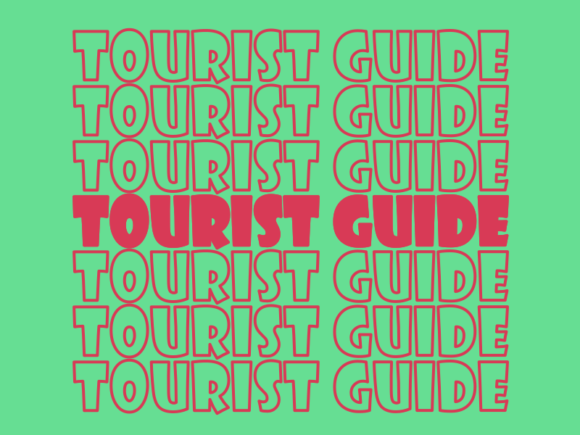
Tourist Guide SVG Cut File: Graphics for Print Templates
First Impression: A Warm, Story-Driven Graphic Design Asset
Opening Tourist Guide SVG Cut File feels like unrolling a hand-drawn map from a charming local bookstore—whimsical yet intentional, detailed but not cluttered. It carries a friendly, approachable brand personality: think artisanal coffee shop signage, a boutique florist’s seasonal packaging, or a handmade soap brand celebrating regional landmarks. It leans into organic charm and gentle illustration—not sleek minimalism or corporate austerity. This isn’t a logo-ready emblem, but a versatile graphic design asset that breathes life into small business branding with warmth and place-based storytelling.
Where It Fits Best: Real Local Business Use Cases
I recently used Tourist Guide SVG Cut File for a coastal candle brand launching a “Harbor Walk” collection—small-batch soy candles named after local piers, lighthouses, and tide pools. The file became the quiet hero across touchpoints: scaled down as a subtle watermark on kraft product labels, enlarged as a decorative border on thank-you cards tucked inside orders, and layered behind hand-lettered typography in Instagram carousel posts. It also anchored a limited-edition sticker sheet sold at a weekend farmers’ market booth—cut cleanly on a Cricut with zero pixelation.
This is a Scalable Vector SVG Graphic—so it holds crisp definition whether printed at 0.5 inches on a tea bag tag or blown up to 36 inches for a window decal. That scalability makes it uniquely valuable for local business owners juggling multiple formats: product mockups, printable inserts, social media graphics, and physical promotional materials—all from one source file.
Stronger First Impressions, Clearer Visual Hierarchy
When applied thoughtfully, Tourist Guide SVG Cut File elevates customer perception instantly. On a plain brown shipping box, it transforms generic packaging into something memorable and locally rooted. Paired with a clean sans-serif brand name, it creates immediate visual hierarchy—guiding the eye without shouting. For food businesses or handmade sellers, that subtle sense of craft and location builds trust faster than stock photography ever could. Customers don’t just see a product; they recognize a story worth supporting.
Smart Applications Across Your Brand Ecosystem
- Product labels & hang tags: Used as a corner accent or background texture—especially effective on matte-finish kraft or recycled paper.
- Packaging design: Works beautifully as a foil-stamped motif on rigid gift boxes or as a die-cut window frame on mailer boxes.
- Social media graphics: Serves as a consistent visual thread across Reels thumbnails, Story highlights, and Pinterest pins—reinforcing local identity without repeating the same photo.
- Printable design & marketing visuals: Ideal for seasonal flyers (e.g., “Summer Stroll Guide” for a boutique), menu headers at pop-up markets, or printable recipe cards for a local bakery’s subscription box.
- Business cards & thank-you cards: Adds tactile warmth when printed on textured cotton stock—ideal for creative entrepreneurs who want their collateral to feel human-made, not algorithm-generated.
Where to Use It Carefully—And Why
Tourist Guide SVG Cut File shines brightest when given breathing room. Avoid cramming it onto ingredient-heavy food labels where regulatory text dominates. It won’t support luxury minimalist brands aiming for monochrome restraint—it’s inherently expressive, not austere. Steer clear of low-contrast backgrounds (e.g., light gray on off-white) unless you’ve tested print output first; delicate line work can vanish. And never use it as primary logo design—its illustrative nature lacks the scalability and versatility needed for true brand identity systems.
Practical Brand Designer Notes You Can’t Skip
Before committing to Tourist Guide SVG Cut File in your next project, run these checks:
- Test it on real packaging mockups—not just screen previews—to assess scale, spacing, and tonal balance.
- Convert to black and white: Does the linework retain clarity? Essential for stamping, embossing, or single-color print runs.
- Preview at actual label size (e.g., 1.25” x 1.75”)—some details blur or vanish when miniaturized.
- Layer it over your brand colors: Does it harmonize with your palette, or compete? Try overlays at 10–20% opacity for subtlety.
- Compare side-by-side with competitor packaging—does it differentiate your offering or blend in?
- Check PNG transparency: If using raster versions, confirm clean edges and no stray pixels.
- Inspect SVG editability: Can you easily isolate and recolor individual elements (e.g., a lighthouse tower vs. water waves)? Crucial for customizing across product lines.
- Test beside your full type system—serif, sans serif, script, handwritten, display fonts—to ensure legibility isn’t compromised.
- Confirm commercial licensing: Verify usage rights cover physical product sales, client work, and digital distribution—no surprises at launch.
Final Thought: A Thoughtful Tool for Intentional Branding
Tourist Guide SVG Cut File isn’t a shortcut—it’s a thoughtful tool for small business branding that values authenticity over automation. When paired with strong editorial design, intentional color choices, and consistent typography, it becomes part of a cohesive brand identity—not decoration for decoration’s sake. For local business owners, handmade sellers, and creative entrepreneurs building something real, this graphic design asset offers both flexibility and feeling: scalable vector precision with soulful, place-based resonance. Use it with purpose, test it rigorously, and let it help tell your story—not replace it.