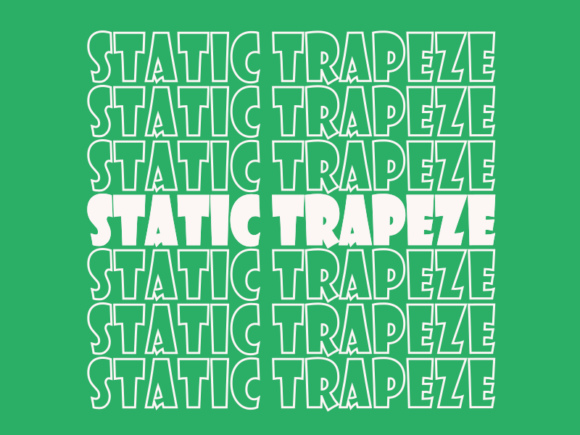
Static Trapeze SVG Cut File: Graphics for Print Templates
As a brand designer who’s built visual identities for over 30 local businesses—from artisanal candle studios in Portland to family-run kombucha brands in Austin—I opened Static Trapeze SVG Cut File expecting another decorative flourish. Instead, I found a quietly confident graphic design asset with surprising versatility across packaging, labels, and promotional visuals.
This is a Scalable Vector SVG Graphic—meaning it scales flawlessly from a ½-inch hang tag to a 48-inch storefront banner without pixelation or distortion. That technical strength alone makes it valuable for small business branding where budget limits rework and consistency is non-negotiable.
A First Impression That Speaks Before the Logo Does
The Static Trapeze SVG Cut File lands somewhere between modern minimalism and hand-crafted elegance. Its clean, symmetrical geometry suggests balance and intention—not fussy, not cold. It reads as thoughtful rather than trendy. For a local business, that’s gold: it supports brand identity without shouting over your product’s story.
I recently used it for a small-batch lavender honey brand in Asheville. Their jars are matte ceramic, labels are uncoated kraft paper, and their voice is warm but grounded. The trapeze shape—neither rigid nor whimsical—anchored the label layout perfectly: subtle enough to feel artisanal, structured enough to signal quality. It didn’t compete with their handwritten logo or ingredient list—it elevated them.
Where This Graphic Design Asset Earns Its Keep
Unlike clipart or generic Canva templates, Static Trapeze SVG Cut File functions as a flexible brand element—not just decoration. Here’s how it delivers real value across touchpoints:
- Product labels: Works as a border accent, background motif, or focal frame around key info—boosting shelf appeal without clutter.
- Packaging design: Scales beautifully on box flaps, belly bands, and sticker seals; adds cohesion across SKUs (e.g., soap bars, linen sprays, tea tins).
- Thank-you cards & hang tags: Adds tactile sophistication to handmade business collateral—especially when foil-stamped or embossed.
- Social media graphics: Serves as a consistent visual anchor across Instagram posts, Reels thumbnails, and Pinterest pins—reinforcing recognition at a glance.
- Printable design & seasonal campaigns: Easily recolored for holidays, launches, or limited editions—no new assets needed.
- Business cards & menu graphics: Provides rhythm and structure without overwhelming typography.
What It Builds—Beyond Aesthetics
Using Static Trapeze SVG Cut File thoughtfully strengthens several pillars of professional branding:
- Stronger first impression: Clean geometry signals care—even before customers read your name.
- Better product recognition: When repeated across labels, stickers, and web banners, it becomes a silent signature.
- Clearer visual hierarchy: Its balanced proportions naturally guide the eye toward your logo or call-to-action.
- More consistent brand identity: One vector file, infinite applications—no version drift across vendors or platforms.
- Improved customer trust: Precision in form subtly communicates reliability—a quiet advantage for food labels or skincare packaging.
Smart Usage Zones—and Where to Pause
Static Trapeze SVG Cut File shines brightest in these contexts:
- Product mockups (especially for ceramic, glass, or textured packaging)
- Hero graphics for website banners or email headers
- Decorative brand elements—think corner flourishes on thank-you cards or subtle watermarks on social content
- Seasonal packaging accents (e.g., metallic trapeze frames for holiday gift boxes)
- Boutique visuals like tote bags, receipt tape, or window decals
Use with caution in:
- Formal corporate branding (it’s too soft for law firms or financial services)
- Labels under 1 inch tall—fine details may blur in print or cut
- Crowded layouts where text density is high (ingredient lists, compliance copy)
- Backgrounds with low contrast—test against your brand colors before finalizing
- Luxury minimalist brands that rely on negative space alone—this adds visual weight, intentionally
Practical Brand Designer Notes You’ll Actually Use
Before locking Static Trapeze SVG Cut File into your next project, do this:
- Test it on real packaging mockups—not just screen previews. Lighting, material texture, and ink absorption change everything.
- Check black-and-white usage: does it retain impact when printed in one color? (It does—but verify with your printer.)
- Preview it on small labels at actual size: zoom in to 300% to assess edge sharpness for die-cutting.
- Test it with your full brand palette—especially muted tones and deep neutrals—to confirm contrast and legibility.
- Compare side-by-side with top 3 competitor packages. Does it help you stand out—or blend in?
- Review PNG transparency if exporting for web use. Does the alpha channel hold up on light/dark backgrounds?
- Inspect SVG editability: can you easily adjust stroke weight, join points, or isolate segments for custom layouts?
- Test it beside serif, sans serif, script, and display fonts—does it harmonize or clash? (It pairs especially well with restrained serifs and airy sans serifs.)
- Confirm commercial licensing applies to physical product sales—not just digital use. This is essential for handmade business owners selling on Etsy or at farmers’ markets.
Final Thought: A Tool That Grows With Your Brand
Static Trapeze SVG Cut File isn’t a trend-chasing illustration. It’s a foundational graphic design asset—one that supports long-term brand identity while adapting to seasonal shifts, new product lines, and evolving customer expectations. For local business owners building real-world presence—on shelves, at markets, in cafes, or through direct mail—it delivers quiet confidence, scalable precision, and design integrity that lasts far beyond the first launch.
When your packaging feels intentional, your labels earn a second look, and your social graphics build familiarity across platforms—that’s not luck. That’s what happens when you choose smart Graphics for Print Templates and use them like a brand designer would.