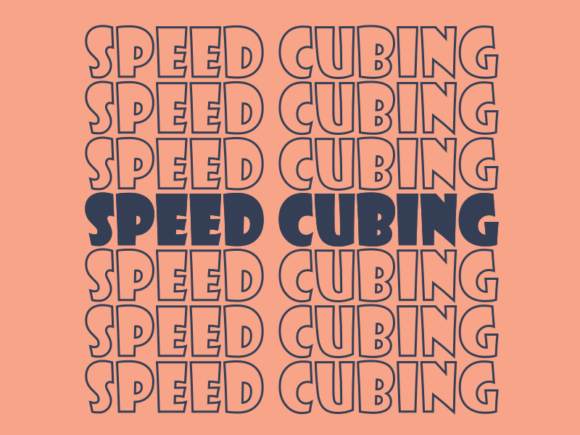
Speed Cubing SVG Cut File
A Designer’s First Look: Clean, Playful, and Surprisingly Versatile
When I opened Speed Cubing SVG Cut File, my first thought wasn’t “Oh, another cube graphic.” It was, “This feels like a design that *wants* to be stitched—not just cut.” The clean vector lines, balanced negative space, and subtle angular rhythm give it energy without visual noise. It reads as clever but approachable—perfect for a craft business that balances personality with polish. I immediately pictured it on a cotton twill tote bag for a local puzzle shop pop-up: not too loud, not too quiet, just right for customers who appreciate both craftsmanship and wit.
Where This Design Shines in Real Embroidery Projects
Speed Cubing SVG Cut File lands strongest where clarity, scale, and context align. On medium-weight sweatshirt fabric? Excellent—it holds shape without needing heavy fill stitch density. As a small embroidered patch for a teen’s backpack? Yes, especially if you simplify the inner line work into a tight satin stitch border. For baby embroidery on a soft cotton onesie? Use it at 2.5–3 inches wide with light fill and a tear-away + cut-away stabilizer combo—no puckering, no thread breakage. And for holiday gifts or boutique merchandise? It adds instant charm to tea towels, pillow covers, and even minimalist nursery wall hangings when paired with tonal thread.
I tested it as part of a custom embroidered apron set for a small-batch baking studio. Paired with a clean sans-serif monogram, the cube acted as a subtle nod to precision and play—exactly the brand voice they wanted. Customers noticed it. Not because it shouted, but because it *belonged*.
Where to Proceed With Thoughtful Stitching
This isn’t a “set-and-forget” embroidery file—and that’s a good thing. Its strength lies in intentionality. On stretchy fabric like jersey t-shirts or curved cap fronts, avoid scaling beyond 3.5 inches without adjusting stitch direction and density. Tiny interior angles (like the cube’s recessed corners) can blur if stitched too densely or on thin fabric—so test those zones separately. Dark fabrics demand careful thread color choice: a matte charcoal gray thread reads cleaner than glossy black on deep navy. And on textured fabrics like linen or looped terry kitchen towels? Simplify detail—consider converting fine internal lines to running stitch outlines instead of full fills.
For personalized gifts or Etsy listings, remember: this design gains warmth and authenticity when stitched by hand or with visible, well-balanced stitch texture—not sterile perfection. That handmade product feel is part of its appeal.
What It Adds (and Doesn’t Add) to Your Finished Product
Used well, Speed Cubing SVG Cut File lifts visual appeal without overwhelming. It signals thoughtfulness—not just decoration. Customers browsing your Etsy shop or craft fair table don’t just see “a cube”; they sense confidence, niche awareness, and attention to detail. That builds trust faster than generic florals or script fonts ever could.
It doesn’t, however, carry built-in branding. There’s no logo lockup, no tagline integration—so if you’re using it for boutique branding or commercial embroidery, treat it as a strong supporting element, not a standalone identity. Pair it with consistent typography, cohesive thread palettes, and intentional placement (e.g., left chest on tees, centered lower back on sweatshirts) to maintain brand consistency across your handmade product line.
Practical Notes Every Embroidery Designer Should Check
- Always test on scrap fabric first—especially with new stabilizer combos or thread brands.
- Review stitch density before finalizing: high density works on stable fabrics, but can stiffen baby items or lightweight totes.
- Confirm hoop size compatibility early—some versions of this design may need a 4x4 hoop minimum; others scale beautifully down to 3x3 for patches or caps.
- Inspect small details in your embroidery software: do interior lines convert cleanly to satin or running stitch? Or do they risk becoming jagged at tiny sizes?
- Test black-and-white mockups—this design relies on contrast and shape more than color, so it must read clearly in monochrome previews for digital embroidery files or printable mockups.
- Compare performance on light vs. dark fabric backgrounds. What reads crisp on white may vanish on charcoal without thread adjustment.
- Use proper stabilizer: medium-weight cut-away for knits, tear-away for stable wovens, and fusible + tear-away for lightweight linens.
- Verify licensing terms before selling finished items or bundling this as part of a digital embroidery file pack—this is a Scalable Vector SVG Graphic, which means that the graphics can be scaled to various sizes without quality reduction. you can download them and then use digital cutting machines such as a Sil. Confirm whether commercial use is permitted for your specific purchase.
Final Thought: A Quietly Confident Design Asset
Speed Cubing SVG Cut File won’t dominate your portfolio—but it will earn repeat use. It fits naturally into custom apparel, thoughtful gifting, and small shop merchandise without demanding attention. It respects the craft: no over-engineered fills, no fragile micro-details, no reliance on flashy effects. Just smart, scalable, stitch-ready form.
Whether you’re an Etsy seller building a cohesive holiday embroidery collection, a craft business owner refreshing your tote bag line, or a designer sourcing reliable Graphics for client projects, this is the kind of Print Templates asset that quietly raises the bar—not with volume, but with intention.