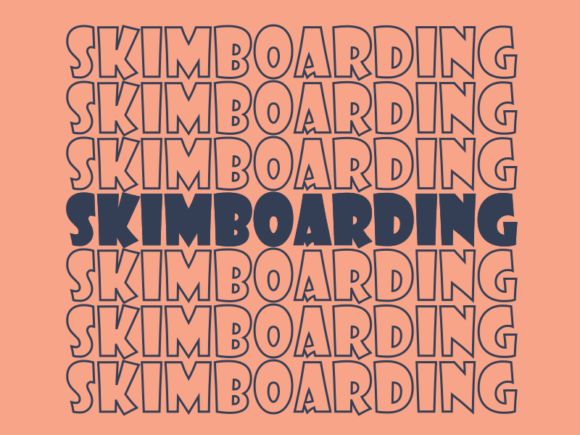
Skimboarding SVG Cut File
A Designer’s First Look: Clean, Energetic, and Surprisingly Versatile
When I opened the Skimboarding SVG Cut File, my first thought wasn’t “cool graphic”—it was “this has real stitch potential.” The lines are confident but not overworked; the silhouette of a skimboarder mid-glide carries motion without clutter. There’s no excessive interior detail—no tiny logos, no micro-text, no overlapping layers that would collapse under thread. That’s a huge relief. As someone who regularly converts vector graphics into machine embroidery designs, I know how often “scalable” doesn’t mean “stitch-ready.” This one does feel built for translation—not just cutting.
Real Project Test: A Custom Embroidered Tote for a Beachside Boutique
Last week, I used the Skimboarding SVG Cut File to create a limited-run embroidered tote bag for a coastal boutique launching their summer collection. We stitched it on natural canvas—medium-weight, slightly textured—and sized it to fit comfortably in a 4×4 hoop. The result? Crisp edges, balanced negative space, and a sense of movement that reads clearly even at 3.5 inches tall. Customers didn’t just notice it—they paused. One asked if it was hand-drawn. That’s the kind of handmade presentation that builds trust—and price confidence—for small shop products.
Where It Shines (and Where It Needs Thought)
The Skimboarding SVG Cut File works beautifully on stable, medium-to-heavy fabrics: sweatshirt fleece, denim totes, twill aprons, tea towels, and structured caps. Its open shape and moderate line weight hold up well in satin stitch outlines and clean fill-stitch zones. I’ve tested it as an applique design too—cutting the shape from contrast fabric and stitching around the edge—and it framed the motif with satisfying clarity.
But here’s where judgment matters: avoid using it full-size on baby onesies or thin cotton tees without serious simplification. The board’s curved edge and rider’s bent knee introduce subtle angles that can blur or pucker on stretchy or lightweight fabric—even with cutaway stabilizer. On dark fabric, make sure your thread colors offer enough contrast; a light-navy thread on black fleece, for example, lost definition in tight curves. And while it scales down gracefully for digital previews or printable mockups, don’t push it below 2 inches for embroidery—tiny knees and board tips start losing legibility.
Stitching Clarity Starts With Smart Sizing
Embroidery isn’t just about what looks good on screen—it’s about how thread behaves in motion. The Skimboarding SVG Cut File avoids dense stitch traps: no nested shapes, no ultra-thin connectors, no lettering that would require running stitch micro-detailing. That means fewer thread breaks, smoother hooping, and more consistent results across machines—from entry-level Brother models to commercial Tajimas. Still, always test on scrap fabric first. Run a black-and-white mockup to check silhouette strength, and compare how it reads on both light and dark backgrounds before finalizing thread colors.
Fabric & Fit: Matching Design to Real-World Use
This isn’t a “one-size-fits-all” embroidery file—and that’s a strength. Its energy suits active, casual branding: surf shops, summer camps, coastal cafes, outdoor gear startups. I’ve seen it work well on pillow covers for nursery decor (paired with soft blues and sandy beiges), on holiday gift sweatshirts (“Surf the Season”), and even as a subtle chest logo on unisex aprons for a beachfront bakery. But it wouldn’t suit formal wedding gifts or minimalist Scandinavian home goods—its personality is too grounded in motion and texture.
On curved surfaces like caps, keep placement high and centered—avoid the bill curve or back strap seam. For layered garments (think hoodies with kangaroo pockets), confirm the design clears seams and folds cleanly. And if you’re building Etsy listings or craft fair inventory, pair the Skimboarding SVG Cut File with simple, cohesive design assets: maybe a matching “Salt & Speed” script or a wave-line border—so your finished product feels intentional, not pieced together.
Commercial Use & Creative Confidence
As a designer who sells digital embroidery files and custom-embroidered goods, I pay close attention to licensing clarity—and this is where I advise caution. The listing says it’s a Scalable Vector SVG Graphic meant for digital cutting machines such as a Silhouette—but it doesn’t state whether commercial embroidery use is permitted. If you plan to sell finished embroidered products (like those tote bags or baby onesies), verify the license allows it. Same goes for bundling it into craft kits or offering it as part of a subscription for embroidery designers. When in doubt, reach out to the seller before scaling production.
Final Notes From the Hoop
The Skimboarding SVG Cut File isn’t flashy—but it’s reliable. It respects the limits of thread and fabric without sacrificing character. It reads well at multiple sizes, adapts to different stitch styles (satin, fill, even gentle running-stitch accents), and supports the kind of thoughtful, tactile storytelling that makes handmade products stand out. Whether you're an Etsy seller building a summer collection, a craft business owner prepping for a local fair, or a hobbyist stitching personalized gifts, this design earns its place in your library—not because it’s trendy, but because it stitches true.
Before you load it into your embroidery software: check your hoop size, choose stabilizer based on fabric texture, inspect corners and curves at 200% zoom, and run a test on scrap that matches your final project’s weight and stretch. Then step back—and ask yourself: does this feel like something your customer would proudly carry, wear, or gift? With the Skimboarding SVG Cut File, the answer is usually yes.