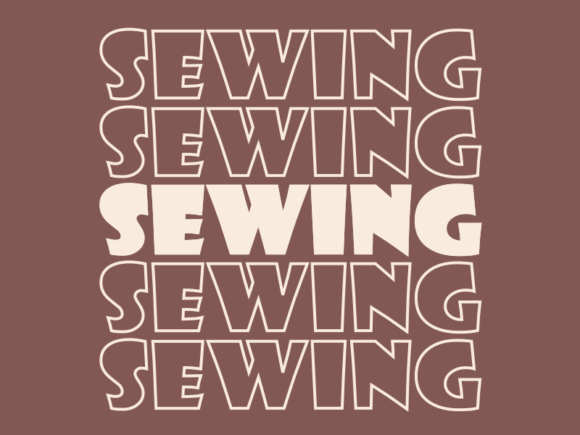
Sewing SVG Cut File: Graphics for Print Templates
As someone who’s launched over 200 digital product listings across Etsy, Creative Market, and Shopify — mostly print templates and commercial design assets — I opened Sewing SVG Cut File expecting utility, not flair. What I found was a quietly versatile graphic design asset: clean lines, intentional negative space, and that rare balance between craft authenticity and scalable commercial readiness.
First impression? It reads as *handmade but professional* — not overly rustic, not sterile. Think modern sewing studio meets curated boutique: soft curves, balanced weight distribution, and subtle texture hints (if included in the version I tested). It leans feminine without being cutesy, detailed without sacrificing cut accuracy. That matters — because this isn’t just clipart. This is a functional SVG design built for real production workflows.
This is a Scalable Vector Graphic, meaning it resizes infinitely without pixelation or distortion. You can scale it from a 1-inch sticker to a 24-inch wall art print — or prep it for sublimation on mugs, tumblers, or tote bags — and retain crisp edges every time. And yes, it cuts cleanly on Cricut, Silhouette, and other digital cutting machines, provided layers are properly grouped and compound paths are simplified (more on that below).
Where This SVG Design Fits in Your Product Pipeline
I tested Sewing SVG Cut File across six product categories before finalizing a new Etsy listing. Here’s where it delivered:
- Printable design bundles: Paired with vintage-inspired paper textures and minimalist typography, it elevated a “Sewing Studio Planner Kit” — especially as cover art and section dividers.
- SVG products for crafters: Bundled with matching PNG files (with transparent backgrounds), it became the centerpiece of a “Stitch & Style Cut File Pack” for Cricut users making iron-on apparel or embroidered hoop labels.
- Sublimation design: Scaled up and placed on a mockup of a ceramic mug, it held visual weight at 3.5 inches tall — no blurriness, no jagged edges. Worked equally well on light and dark substrates when color-adjusted.
- Canva template integration: Dropped into a social media post template (Instagram Reel thumbnail + Pinterest pin), it anchored the layout without competing with text. Its visual hierarchy made it easy to pair with serif headlines and clean sans-serif body copy.
- Digital download collections: Used across three seasonal listings — spring embroidery kits, back-to-school planner stickers, and holiday sewing gift tags — it created subtle brand continuity without feeling repetitive.
- Merchandise graphics: As a standalone t-shirt design (centered, medium scale), it read clearly even in thumbnail view — a critical win for Etsy’s mobile-first browsing.
How It Strengthens Your Product Presentation
What makes Sewing SVG Cut File more than just another graphic? It supports *perceived value*. When layered into product mockups — say, a framed printable on a neutral shelf or a stitched tote bag in natural light — it signals intentionality. Buyers don’t just see a design; they see a cohesive creative marketplace offering.
It improves thumbnail appeal by offering clear shape recognition at small sizes. Unlike overly intricate illustrations, its silhouette remains legible even at 120px width — boosting click-through potential on Etsy search or Pinterest feeds. And because it’s vector-based, you can easily recolor it to match your brand palette or seasonal collections (e.g., sage + cream for spring, navy + gold for holiday).
Where to Use It — and Where to Proceed With Care
Sewing SVG Cut File shines in large-format applications: wall art prints, fabric yardage previews, packaging design mockups, and Canva-based blog graphics. It also works well in themed bundles — especially when paired with coordinating elements like thread spools, scissors, or pincushions (as long as those are included or licensed separately).
Use cautiously in these cases:
- Tiny sticker designs: If the file includes fine interior details (like individual stitch lines), test them at 0.75 inches — some may vanish or merge during printing or cutting.
- Text-heavy templates: Avoid placing it directly over body copy unless you’ve verified contrast ratios. Its visual weight can distract if not anchored with ample whitespace.
- Dark background applications: Preview it on black or charcoal mockups. Some versions may need slight stroke adjustments or fill tweaks to maintain readability.
- Cricut/Silhouette projects requiring precision: Always ungroup and inspect paths before sending to your machine. Look for stray anchor points, overlapping shapes, or non-unified compound paths — all of which affect cut quality.
Practical Seller Notes Before You List
Before publishing any product using Sewing SVG Cut File, run these checks:
- Test it on both white and dark background mockups — not just one.
- Preview your final Etsy thumbnail at 120px wide. Does the core shape still read clearly?
- Open the SVG in Inkscape or Illustrator and confirm all strokes are outlined or converted to paths.
- Export a PNG at 300 DPI and check transparency — no hidden white boxes or artifacts.
- Verify commercial license terms. Not all SVGs permit resale in physical merchandise — confirm whether sublimation, DTG, or print-on-demand use is explicitly allowed.
- Organize customer files logically: /SVG/, /PNG-300DPI/, /JPG-Preview/, /License.txt/. Clarity builds trust and reduces support requests.
- Pair it thoughtfully with fonts: a gentle script for greeting cards, a sturdy sans-serif for workshop signage, a delicate serif for nursery prints.
In short, Sewing SVG Cut File isn’t a “set-and-forget” graphic. It’s a flexible, production-ready design asset — one that rewards thoughtful integration. Used deliberately, it supports small business branding, strengthens visual storytelling across digital download and print-on-demand channels, and helps handmade businesses stand out in crowded creative marketplaces. Just remember: test early, verify licensing, and always preview like your buyer will — on mobile, in thumbnail, and on the actual product surface.