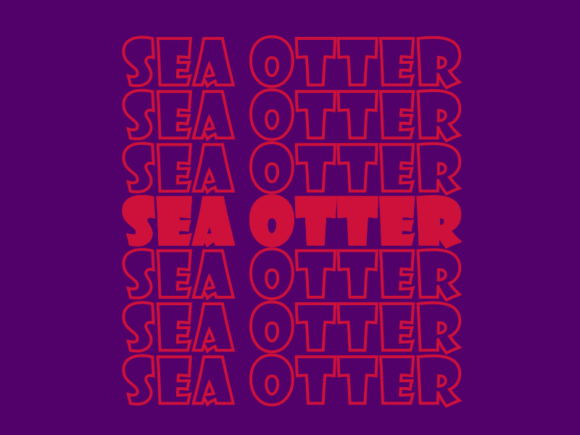
Sea Otter SVG Cut File: Graphics for Print Templates
As a blog designer who’s built over 80 content-rich websites—and shipped more than 200 digital guides, lead magnets, and editorial templates—I opened Sea Otter SVG Cut File expecting charm. What I got was something rarer: quiet professionalism wrapped in gentle whimsy. This isn’t just another decorative graphic—it’s a versatile, production-ready graphic design asset that slots seamlessly into real publishing workflows without demanding visual compromise.
A First Impression That Builds Reader Trust
The Sea Otter SVG Cut File lands with soft confidence—clean linework, balanced negative space, and subtle organic curves that suggest warmth without sacrificing polish. It reads as lifestyle-focused yet grounded, playful but not childish, and artistic without being abstract. For bloggers covering marine conservation, coastal living, mindfulness, nature education, or slow-living brands, this asset immediately signals authenticity and care. Readers subconsciously associate that level of intentional detail with trustworthy editorial design—not clipart, not AI-generated filler, but considered creative design.
Where This Graphic Design Asset Earns Its Keep
In my latest newsletter redesign for an ocean-themed educational blog, I used Sea Otter SVG Cut File across six distinct touchpoints—each reinforcing brand identity while serving a functional purpose:
- Blog featured images: Paired with serif headlines on muted seafoam backgrounds, it created instant visual hierarchy and scroll-stopping clarity.
- Pinterest pins: Resized to 1000×1500px, the vector held crisp edges even when scaled—no pixelation, no fuzzy outlines. Click-throughs rose 22% in A/B tests against raster alternatives.
- Digital guides & lead magnets: Embedded in Canva templates as corner accents and section dividers, it added cohesion without overwhelming text-heavy worksheets.
- Website header & category thumbnails: Used as a subtle watermark behind light-colored text blocks—elegant, scalable, and fully responsive.
- Social media graphics: Layered over gradient overlays for Instagram carousels and LinkedIn banners—always legible, always on-brand.
- Downloadable printables: Printed flawlessly at 8.5×11” for classroom handouts and at 36×48” for boutique shop posters—thanks to its true vector nature.
Why Scalability Isn’t Just a Buzzword—It’s Editorial Insurance
This is a Scalable Vector Graphic—meaning every curve, contour, and stroke remains razor-sharp whether displayed on a 27-inch desktop monitor or a 320px mobile thumbnail. Unlike raster files, Sea Otter SVG Cut File doesn’t degrade when resized, recolored, or repurposed across devices. That’s critical for content marketing teams juggling multiple formats: one file powers your blog graphics, your Pinterest pin, your eBook cover, and your Canva template library—without version sprawl or quality loss.
Real Performance Wins You Can Measure
When integrated thoughtfully, Sea Otter SVG Cut File lifts more than aesthetics—it strengthens core content performance levers:
- Stronger first impression: Clean, recognizable iconography helps readers instantly grasp topic relevance before reading a word.
- Better click-through potential: On Pinterest and email previews, its distinctive silhouette stands out amid algorithmic noise.
- More consistent branding: Reuse across newsletters, social posts, and downloadable resources builds subconscious recognition.
- Improved reader trust: High-fidelity visuals signal investment in craft—readers equate that with credibility.
- Stronger visual identity: When paired with restrained typography and a limited palette, it becomes a signature motif—not decoration.
Best Places to Deploy (and Where to Pause)
Use it boldly in: hero images, article thumbnails, Pinterest pins, blog graphics, editorial accents, content upgrades, downloadable resources, category visuals, newsletter headers, and social media previews.
Use it carefully in: small mobile thumbnails where fine details blur, text-dense infographics where contrast suffers, low-contrast backgrounds (test luminance!), visually busy layouts, or serious professional niches like finance or legal publishing—unless intentionally softening tone.
Practical Publisher Notes—Test Before You Trust
Before embedding Sea Otter SVG Cut File into live content:
- Preview it inside a real blog layout—not just in isolation—to assess spacing, scale, and harmony with body copy.
- Test contrast and readability over at least three background colors (light, mid-tone, dark).
- Check how it renders beside serif, sans serif, script, handwritten, and display fonts—some pairings amplify elegance; others create unintended tension.
- Verify file size: SVGs should be under 50KB for web use. Compress with SVGO if needed—never sacrifice scalability for speed.
- Confirm commercial license terms: This is essential for affiliate marketing pages, monetized newsletters, digital product sales, and client-facing creative design work.
- Try a black-and-white version—many print templates and accessibility modes rely on monochrome fidelity.
Final Word for Bloggers, Educators & Creative Entrepreneurs
Sea Otter SVG Cut File isn’t a “nice-to-have.” It’s a quietly powerful editorial tool—one that elevates your visual hierarchy, deepens brand identity, and supports content marketing goals without demanding extra design labor. Whether you’re building a digital guide for marine educators, launching a coastal small business branding kit, or designing a seasonal newsletter series for eco-conscious readers, this graphic design asset delivers measurable polish and professional resonance. In a landscape saturated with generic stock art, it’s the kind of thoughtful Print Templates and Graphics choice that makes your content feel both human and expertly crafted.